Decide between repair or replacement with commercial HVAC Edmonton insights.
Quick Answer: Should You Repair or Replace Your HVAC System?
If you need a fast decision, use these guidelines:
Repair your HVAC system if:
The system is less than 10–12 years old
The issue is minor or isolated (not recurring)
Repair costs are low compared to replacement
The system still runs efficiently overall
Replace your HVAC system if:
The system is 12–15+ years old
Breakdowns are frequent or recurring
Energy bills have noticeably increased
Repair costs exceed ~40–50% of replacement cost
For many building owners and facility managers, deciding whether to repair or replace an HVAC system is not always straightforward. With rising energy costs and increasing system demands, making the right choice can significantly impact your operations.
Understanding the condition of your system and the role of commercial HVAC Edmonton services and HVAC maintenance Edmonton programs can help you make a cost effective and practical decision.
Key Factors to Consider Before Deciding
Repair vs Replace: Quick Comparison
Factor | Repair HVAC | Replace HVAC |
|---|---|---|
System Age | Under 10–12 years | 12–15+ years |
Repair Frequency | Occasional | Frequent breakdowns |
Energy Efficiency | Still acceptable | Declining performance |
Upfront Cost | Lower | Higher investment |
Long-Term Cost | Can increase over time | Lower operating cost |
System Reliability | Moderate | High |
Before choosing between repair and replacement, it is important to evaluate several factors that affect system performance and long term value.
Consider:
Age of the HVAC system
Frequency of recent repairs
Energy efficiency levels
Overall system reliability
Cost of ongoing hvac maintenance
These elements provide a clearer picture of whether your system is still meeting your building’s needs.
When Repair Is the Right Option
In many cases, repairs are the most practical solution, especially if the system is still relatively new and well maintained.
Repair may be ideal when:
The system is under 10 to 12 years old
Issues are minor or isolated
Repair costs are significantly lower than replacement
The system has a strong HVAC maintenance Edmonton history
Timely repairs combined with regular hvac maintenance can extend the life of your system and delay the need for a full upgrade.
When It Is Time to Replace Your System
There comes a point where replacing your HVAC system is the more cost effective and reliable option.
Replacement is often recommended when:
The system is nearing or beyond its expected lifespan
Repairs are becoming frequent and costly
Energy bills continue to increase
Comfort levels are inconsistent throughout the building
According to Natural Resources Canada, upgrading to more energy efficient systems can significantly reduce operational costs over time.
https://natural-resources.canada.ca/energy-efficiency
Investing in a new system also allows you to take advantage of modern technology and improved performance.
The Role of Preventative Maintenance
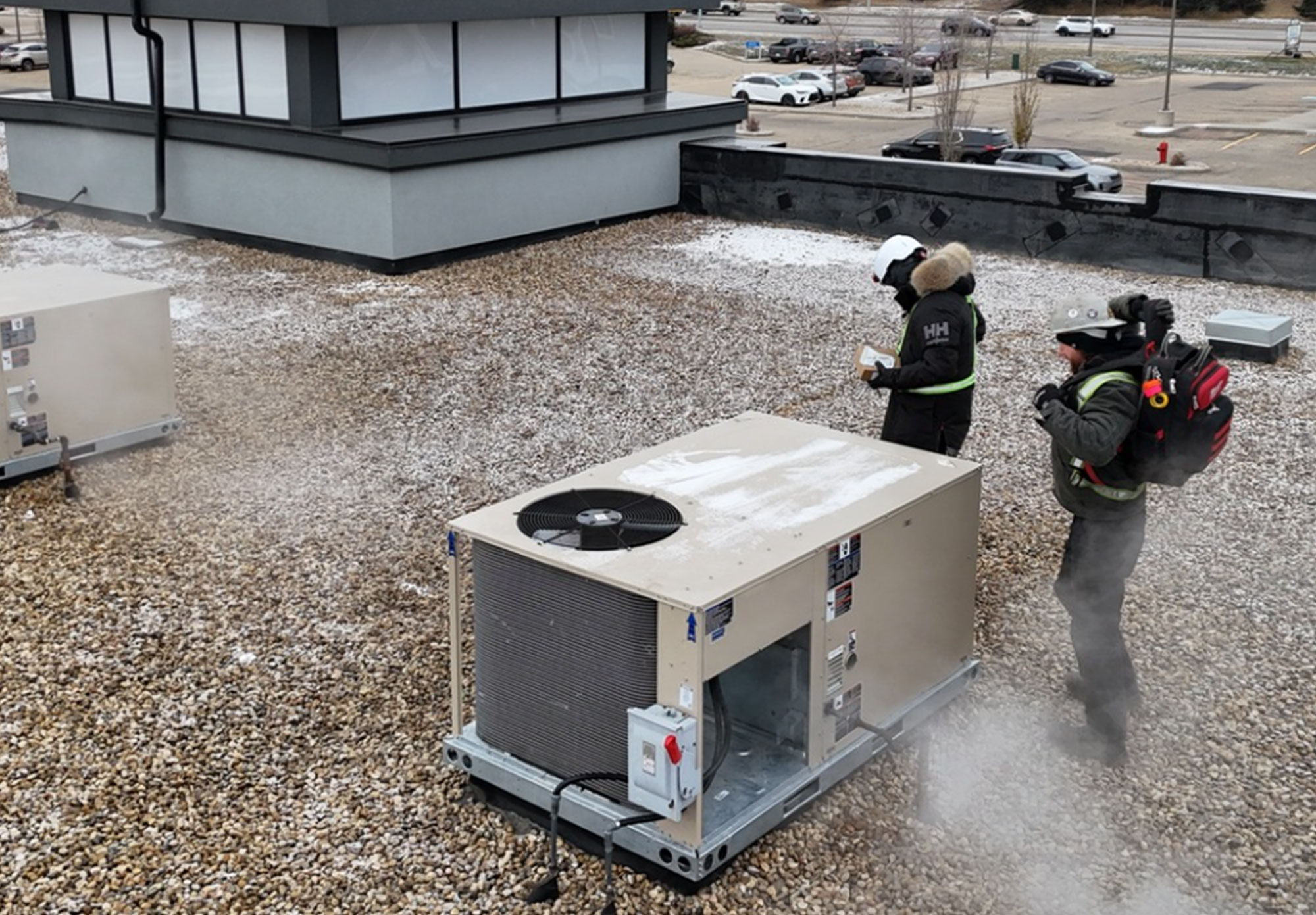
A consistent hvac maintenance plan plays a major role in both extending system life and informing replacement decisions.
Benefits include:
Early detection of potential issues
Improved energy efficiency
Reduced risk of unexpected breakdowns
Better long term planning for upgrades
Working with a professional team ensures your commercial HVAC Edmonton system is regularly assessed and maintained for optimal performance.
Cost Comparison: Repair vs Replacement
While repairs may seem less expensive upfront, repeated service calls can quickly add up. On the other hand, replacement requires a larger initial investment but can provide long term savings.
A simple way to evaluate:
If repair costs exceed 30 to 40 percent of replacement cost, replacement may be more practical
If downtime impacts operations, reliability becomes a key factor
Industry guidelines from ASHRAE emphasize lifecycle cost analysis when making HVAC decisions.
https://www.ashrae.org/
Real-World HVAC Decision Examples
Scenario 1: Office Building (8 years old)
Issue: Minor airflow inconsistency
Recommendation: Repair
Reason: System is still within efficient lifecycle
Scenario 2: Warehouse Facility (18 years old)
Issue: Frequent breakdowns and rising energy costs
Recommendation: Replace
Reason: System is past efficient operating life
Scenario 3: Commercial Retail Space (14 years old)
Issue: Compressor failure + high repair estimate
Recommendation: Replace
Reason: Repair cost approaches replacement value
Real World Example in Edmonton
In a commercial office building in Edmonton, an aging HVAC system required multiple repairs within a single year. After evaluating repair costs and energy performance, the building management opted for a full replacement.
The result was improved efficiency, lower energy costs, and fewer service interruptions. This demonstrates how proactive planning around commercial HVAC Edmonton systems can support long term operational stability.
FAQ: Commercial HVAC Repair vs Replacement
How long does a commercial HVAC system last?
Most commercial HVAC systems last around 12 to 20 years, depending on usage, maintenance quality, and operating conditions. Systems that are heavily used or poorly maintained may require replacement closer to the 12–15 year range.
How do I know if my HVAC system should be repaired or replaced?
A good rule of thumb is:
Repair if the system is relatively new, issues are minor, and performance is still efficient
Replace if the system is older, frequently breaking down, or becoming inefficient
If repair costs are close to 40–50% of replacement cost, replacement is often the better long-term decision.
Is it worth repairing a 15-year-old HVAC system?
In many cases, a 15-year-old HVAC system is nearing the end of its efficient lifespan. While small repairs may still be possible, repeated issues or major component failures often make replacement more cost-effective over time.
What are the signs that my HVAC system needs replacement?
Common signs include:
Frequent breakdowns or service calls
Rising energy bills without increased usage
Uneven heating or cooling across the building
Loud or unusual system noises
Difficulty finding replacement parts
What is more cost-effective: HVAC repair or replacement?
Repair is usually cheaper in the short term, but replacement often provides better long-term value if the system is aging or inefficient. Newer systems typically reduce energy consumption and maintenance costs over time.
What is the “40–50% rule” in HVAC decisions?
The 40–50% rule means that if the cost of repairing your HVAC system is more than 40–50% of the cost of a new system, replacement is usually the more practical and cost-effective option.
Can regular maintenance prevent HVAC replacement?
Yes. Regular maintenance can significantly extend the lifespan of an HVAC system by improving efficiency, preventing breakdowns, and identifying issues early. However, even well-maintained systems will eventually reach the end of their lifecycle.
Should I get a professional opinion before deciding?
Yes. A licensed commercial HVAC technician can evaluate system age, repair history, and performance to recommend whether repair or replacement is the better option for your facility.
Pro Tips